
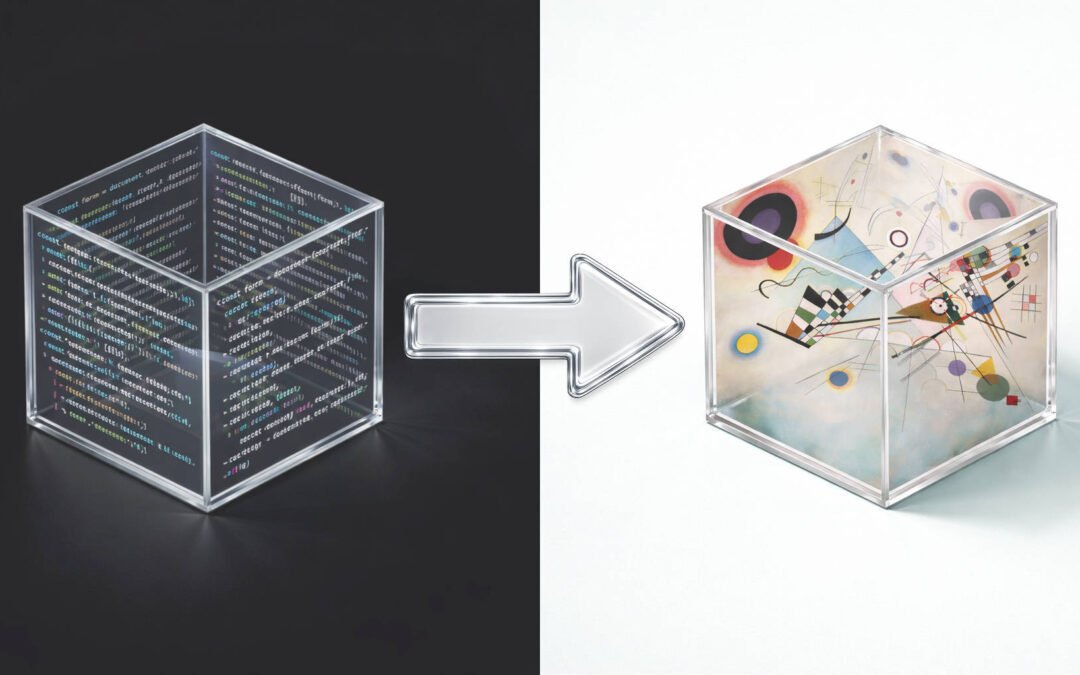
Intro
Prompts are not enough! We need true understanding to create amazing and sustainable software.
I believe we will still need developers, they just need to write exact specifications in English instead of a programming language. How exactly will this happen? What shall we do to our existing huge codebases? Can the specification (your Markdown) be the source of truth? How can you describe intent?
Each character of this text was written by me, Zsolt Balai, some pictures were generated by AI.
Definition
Domain Driven Development + LLM = Intent Driven Development
The principles Domain Driven Development (DDD) and eXtreme Programming (XP) are used to discover, define and clarify needs and stories in Markdown format. Then you use LLM prompts and/or agents to build software.
Explanation
It seems programming is changing radically. This article explains the next level of automatization in software development:
https://matthewberman.substack.com/p/the-end-of-programming
It says you don’t need programmers: I believe we still need them, they will just use other tools to reach the same goals much faster. In 2025 and onward we have software development without writing a single line of code. It is important to note, that you don’t have to write code, but you have to understand it.
You could try and err your way to the top, but why don’t we use knowledge accumulated earlier? I see a big value in using the principles of Domain Driven Development and Extreme Programming.
DDD answers: “What should we build?”
XP answers: “How do we build it safely and fast?”
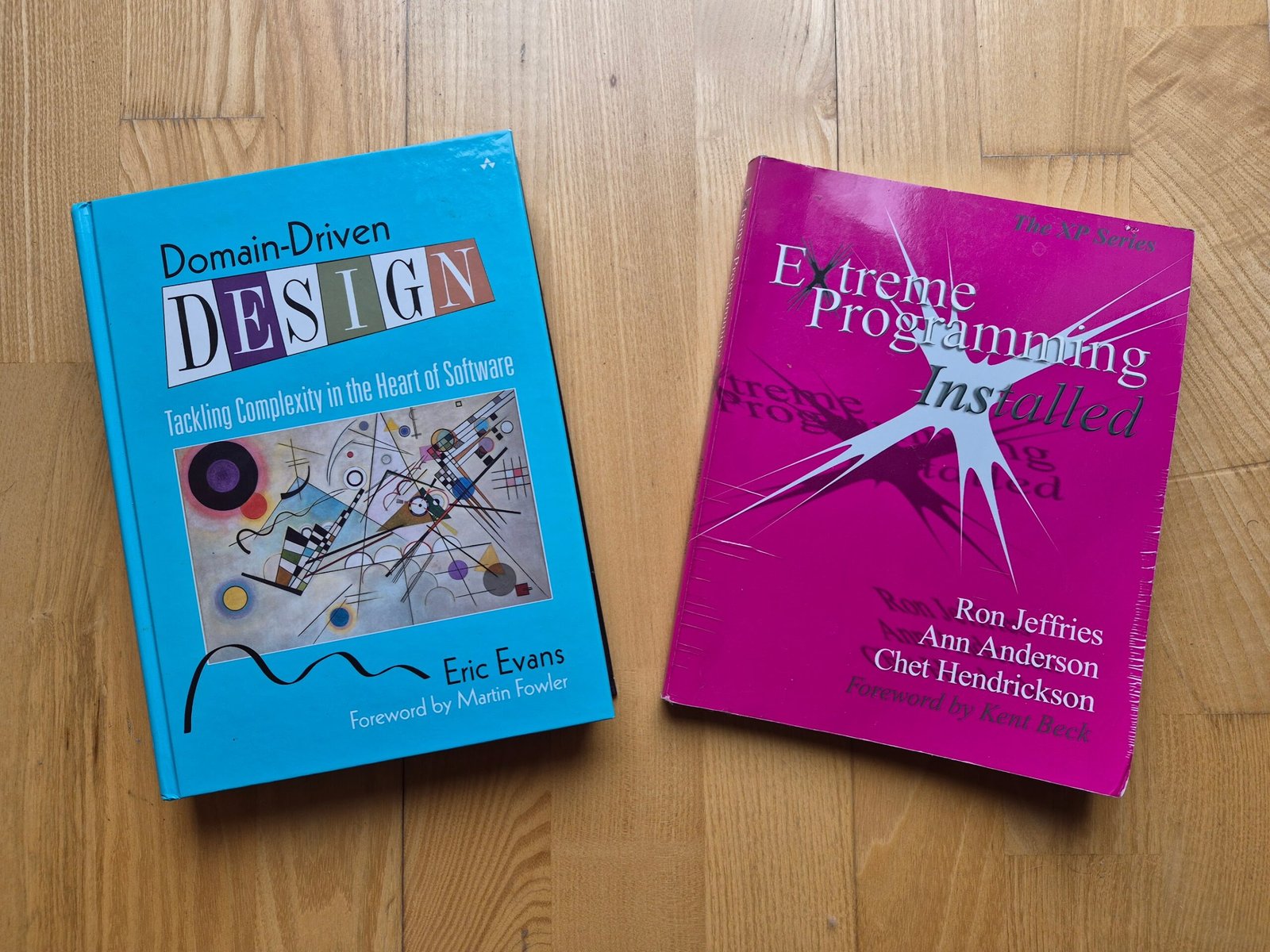
The following expressions were, are and will stay relevant in the coming years:
Domain Driven Development
- Ubiquitous Language
- Entity
- Value Object
- Aggregate
- …
eXtreme Programming
- XP Story
- Small Releases
- Simple Design
- Test Driven Development
- …
Understanding Software
True human understanding of needs and software is necessary and inevitable.
There are many tools that promise that you just make a simple wish for an application or a portal and it automatically just “appears” from nothingness and will exist forever. According to my experience this is not the case. There are many tools that can create a working solution, a prototype. If however there is some kind of custom backend service in the project, it gets complicated very quickly. The LLM generators could hide these complexities for a while, but many times they reached a level, a phase they could not complete. I tried to fix it with 100+ prompts and it couldn’t.
So prompts may be not enough!
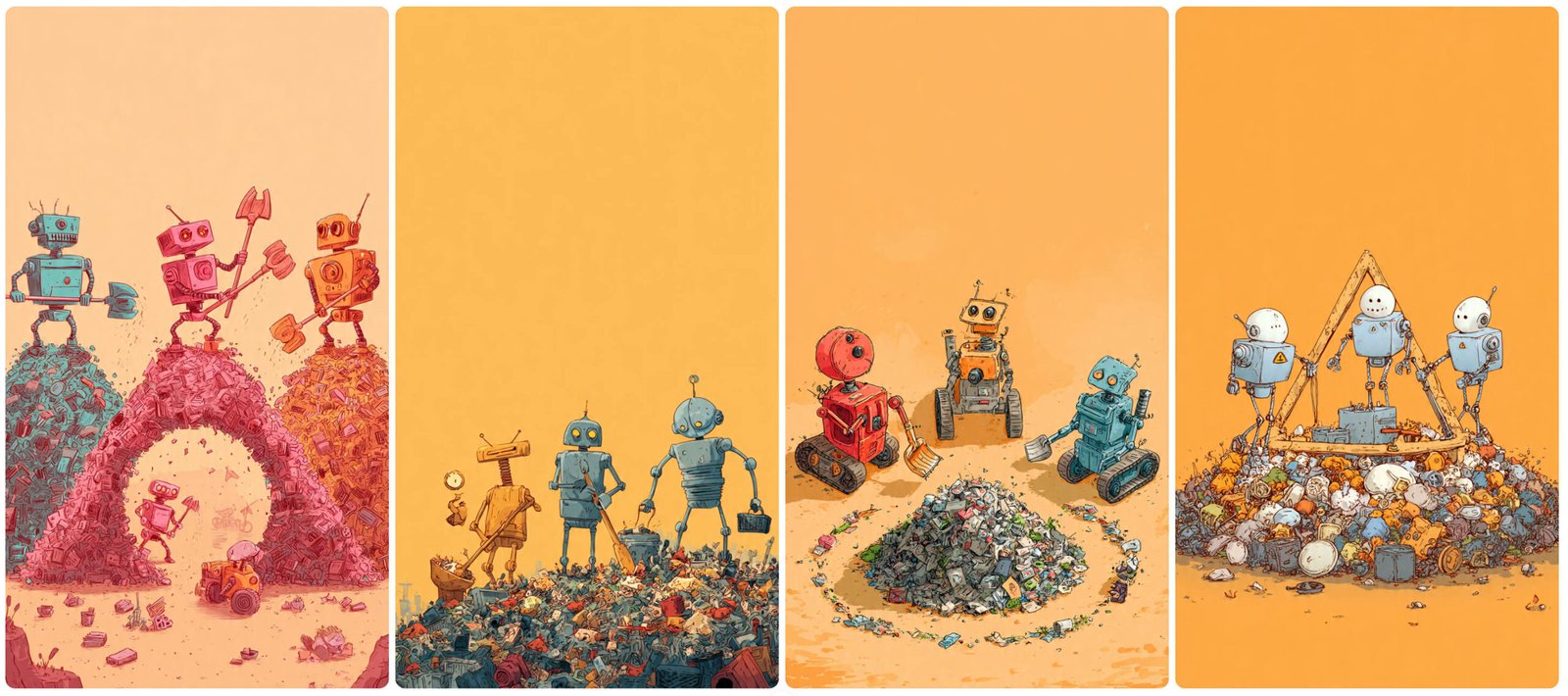
Problems with one line software generators
- Security: Where is your data stored? How is data theft or leakage prevented?
- Additional features may not be possible
- Any one prompt can change unexpected code files and break multiple modules or the whole solution
So no matter how many prompts you add without deep understanding, you will not arrive to the desired solution. Robots/LLMs without understanding tend to generate just piles of garbage.
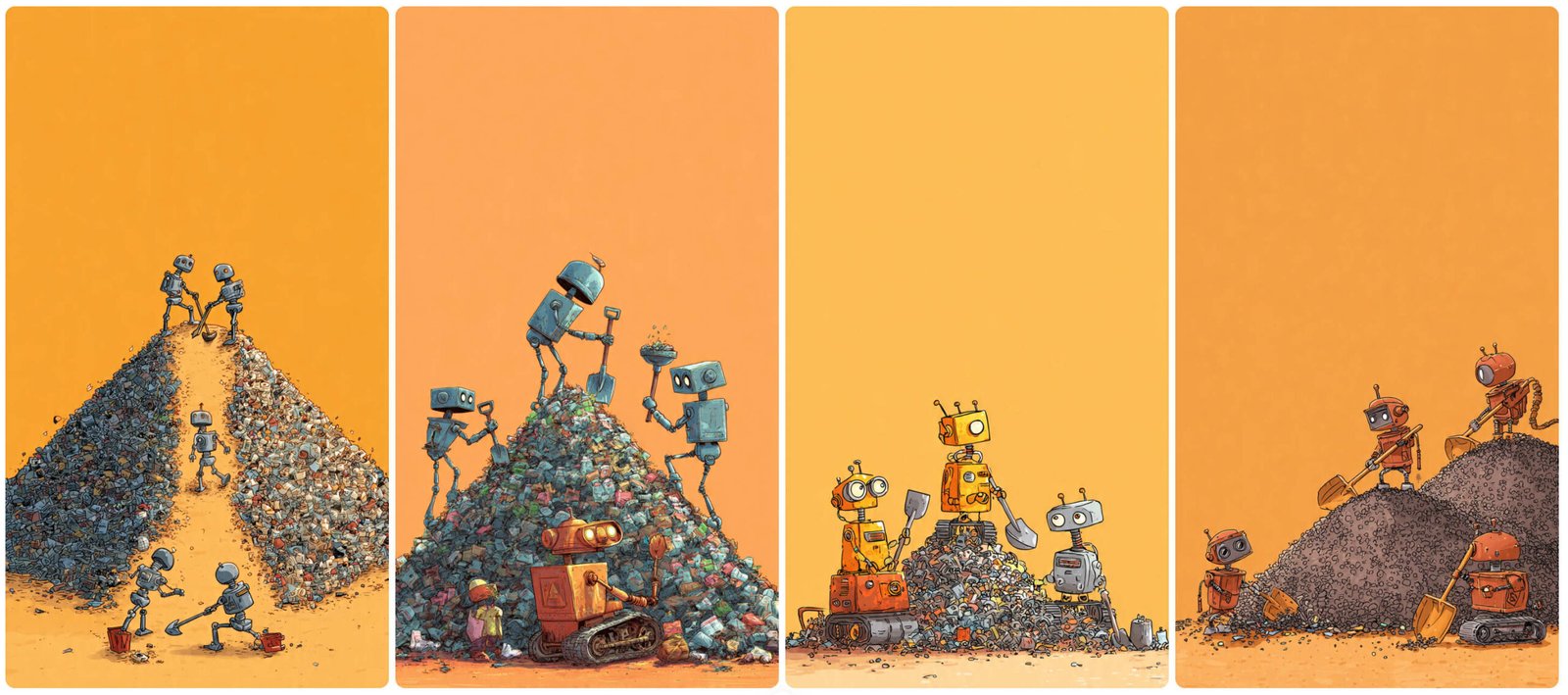
If your project start to look like these robotic images, you can contact me at zbalai gmail 😉
The solution was for me to make sure I understood the domain and the technology well. I also started to understand the way the LLM generated the actual project. This way I could exactly point to the correct solution, sometimes in minutes.
Responsibility for the solution is and will stay by a human owner. This developer/designer/architect/owner must understand the field. I will just use the word developer although I mean a developer/designer/architect/owner: What is new in 2025 is that one such developer with LLM assistance can do the job of 10 – 100 developers.
How to become an AI-assisted developer (a developer actively using LLMs and LLM agents) ?
Make sure you understand the most basic 30-100 concepts of the language in the project. This includes not only business terms and the programming language – for example Typescript – , but also the important libraries and expressions that are repeated tens of times in your repository.
An attempt at this understanding might be to analyse, which are the 30-60 most used expressions in your project. You can group these expressions and let an LLM explain them in a way comfortable and specific for you.
Example Project
An example project is under construction, I will post it as soon as it is ready.
Zsolt Balai, the author of this article is a software developer and intent driven engineer. He is working on publishing gamified learning apps and collaborative multiplayer systems. Contact him at zbalai gmail.
Recent Comments